SUSTAINABILITY
A more sustainable Bengaluru home starts with water, shade and maintenance
An eco-conscious home is not a checklist of gadgets. It is a house that uses less, lasts longer and is easier to look after.
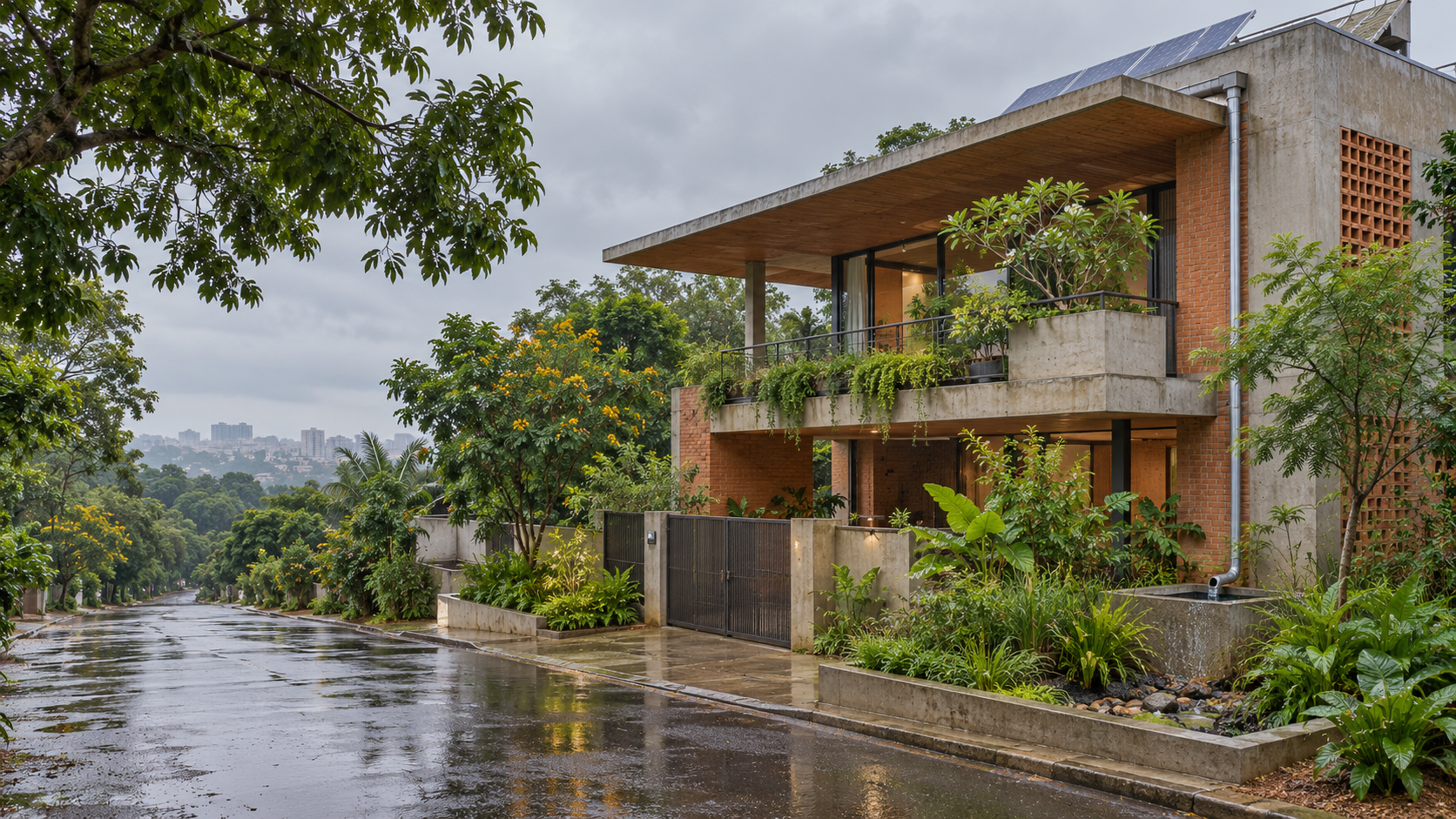
Sustainable homebuilding often gets reduced to a solar panel photo. Solar can be valuable, but the practical starting point is simpler: reduce avoidable heat, move rainwater sensibly, use water carefully and choose parts of the house that can be repaired rather than replaced.
Protect the house from sun and rain first
External shade, shaded terraces, considered window placement, roof insulation where appropriate and breathable outdoor areas reduce the load on mechanical cooling. Good drainage, waterproofing and protective overhangs help the building survive the monsoon with less damage and fewer reactive repairs.
Treat rain as a resource and a design problem
Plan the route from roof to downpipe to storage or recharge before finishes begin. The appropriate approach depends on the site, soil conditions, local requirements and maintenance capacity. What matters is that the system can be inspected and kept clear—not merely drawn on a brochure.
Choose low-maintenance wins
- Efficient plumbing fixtures and a repairable plumbing layout.
- Native or climate-appropriate planting rather than high-water landscaping.
- LED lighting with circuits designed around actual use.
- Provision for solar, EV charging or future equipment while walls and slabs are open.
- Durable external finishes suited to their exposure.
Think in whole-life cost
A sustainable choice is often one that prevents replacement. A better sill detail, a durable exterior coating or a window that seals properly can save resources and disruption over years of use. Ask not only “what does this cost now?” but also “what will it need from us in five years?”
PLAN WITH MORE CLARITY