COST & PLANNING
Construction cost in Bengaluru: how to read a quote before you sign
The number is only useful when you know what it includes, what it excludes and how it can change.
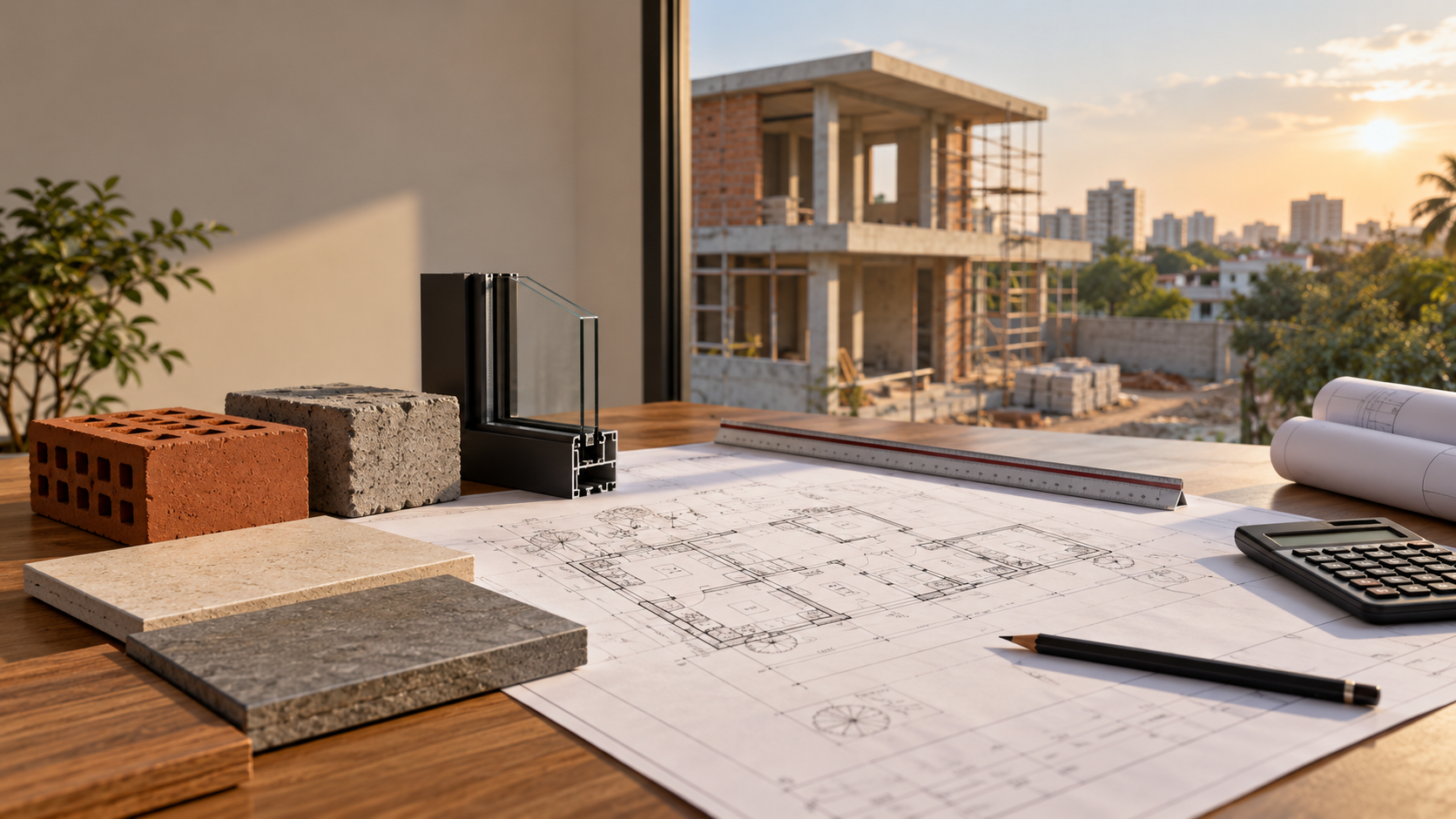
A construction quote can look reassuringly simple: one rate, one area, one total. But a house is not a menu item. The same ₹/sq.ft figure can describe two very different scopes of work. For a homeowner, the useful comparison is not “who is cheapest?” It is “what exactly will be delivered, to what standard, and what could still become an extra?”
Begin with the area being priced
Ask whether the number is based on plot area, floor area, built-up area, chargeable area or another measure. Then ask for a floor-by-floor area statement. A quote can be mathematically correct and still be impossible to compare if each builder is counting a different thing.
Turn the quote into a checklist
Request one written scope that covers design, approvals, excavation, structural work, masonry, waterproofing, windows, electrical, plumbing, finishes, external works and handover. Under every heading, look for the brand or performance standard, quantity or allowance, and the installation responsibility.
- Materials: Is the grade, make or approved equivalent written down?
- Finishes: Is there an allowance, a selected product, or only a broad label?
- MEP: Are points, routes and equipment included—or merely provisioned?
- External works: What happens to compound walls, paving, tanks, drainage and landscaping?
Separate changes from omissions
A fair contract has a route for changes. That is different from discovering later that an item was never included. Before signing, ask for the exclusions list and the process for approving a change in cost or time. The best time to resolve ambiguity is while everyone is still comparing the same drawing set.
Look beyond the starting total
Payment milestones, rate-lock terms, taxes, design fees, authority charges and escalation language can matter as much as the first total. A lower opening price is not automatically better if the specification is thinner or the procedure for variation is unclear. A clear quote gives you a basis for a calm decision—and a cleaner build.
PLAN WITH MORE CLARITY